
Best Time to Visit Paris: A Complete Guide for Every Season
Paris is beautiful throughout the year, but choosing the best time to visit Paris can make a big difference to your experience. Spring brings blooming gardens, summer fills the streets with activity, and autumn transforms the parks with golden leaves.
However, the ideal travel dates depend on your priorities. Some visitors want pleasant weather for sightseeing, while others prefer quieter museums, affordable hotels, or festive holiday decorations.
This guide compares every season, explains what to expect each month, and helps you choose the right time for your Paris adventure.
Best Time to Visit Paris at a Glance
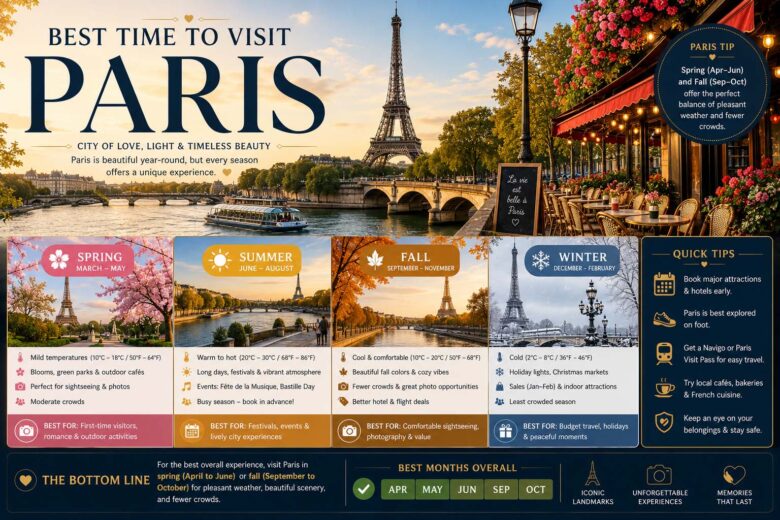
For most travelers, April through June and September through October offer the best balance of weather, sightseeing, and comfortable walking conditions.
During these months, visitors often enjoy:
- Mild temperatures
- Pleasant daylight hours
- Beautiful parks and gardens
- Outdoor café dining
- Comfortable sightseeing conditions
However, summer generally attracts more international visitors, while winter can offer better accommodation deals outside the holiday period.
| Season | Typical Weather | Crowds | Best For |
|---|---|---|---|
| Spring (March–May) | Cool to mild | Moderate to high | Gardens, sightseeing, cafés |
| Summer (June–August) | Warm, occasionally hot | High at major attractions | Festivals, outdoor activities |
| Autumn (September–November) | Mild to cool | Moderate | Museums, photography, food |
| Winter (December–February) | Cold | Lower outside holidays | Festive atmosphere, budget trips |
Although every season has advantages, late spring and early autumn are particularly appealing for first-time visitors.
Why Visit Paris in Every Season?
Unlike destinations that depend heavily on beaches or seasonal activities, Paris offers memorable experiences throughout the year.
Visitors can enjoy:
- Historic landmarks
- World-famous museums
- Shopping districts
- French restaurants
- Seine River cruises
- Art galleries
- Neighborhood cafés
For example, rainy afternoons provide an opportunity to explore museums. Meanwhile, sunny days are perfect for walking through parks and historic neighborhoods.
Therefore, even when the weather changes, Paris offers plenty of activities.
Best Time of Year to Visit Paris for Sightseeing
Many experienced travelers consider late spring and early autumn the most comfortable periods for exploring the city.
During these months, you’ll often experience:
- Pleasant daytime temperatures
- More comfortable walking conditions
- Outdoor dining opportunities
- Attractive gardens and parks
- Less intense summer heat
In particular, May, June, September, and early October offer appealing conditions for sightseeing.
However, popular landmarks can remain busy during these periods. Therefore, booking major attractions in advance is still worthwhile.
If your travel plans include other European destinations, you may also want to compare the best time to visit london before choosing your itinerary.
Best Months to Visit Paris for Pleasant Weather
Paris experiences four distinct seasons, although conditions vary from year to year.
Typical daytime temperatures generally fall within these approximate ranges:
| Season | Typical Daytime Temperature |
|---|---|
| Winter | 40–48°F (4–9°C) |
| Spring | 55–68°F (13–20°C) |
| Summer | 72–82°F (22–28°C) |
| Autumn | 55–68°F (13–20°C) |
These figures are broad seasonal estimates rather than guaranteed temperatures. Early spring and late autumn can be considerably cooler, while summer heatwaves sometimes bring much higher temperatures.
In addition, rain is possible throughout the year. Therefore, packing a compact umbrella or lightweight waterproof jacket is a sensible precaution.
For current visitor information, seasonal activities, and practical planning resources, consult the official Paris Tourist Office website.
Best Time to Visit Paris by Season
Each season offers a different experience. Therefore, choosing the right one depends on whether you value comfortable weather, cultural events, lower prices, or festive surroundings.
Spring in Paris: Best for Gardens and Sightseeing
Spring is one of the most attractive periods for visiting Paris, particularly from April through May.
As temperatures gradually rise, parks and gardens begin to bloom. Outdoor café terraces also become increasingly appealing.
Highlights include:
- Flowering gardens
- Comfortable sightseeing weather
- Longer daylight hours
- Pleasant neighborhood walks
- Seasonal outdoor dining
For example, the Luxembourg Gardens and Tuileries Garden become particularly attractive as flowers and trees return to life.
However, March can still feel chilly, and spring showers are common.
Best for: Couples, first-time visitors, garden lovers, and travelers who enjoy walking.
Summer in Paris: Best for Festivals and Outdoor Activities
Summer brings long days, lively outdoor activities, and a busy tourist atmosphere from June through August.
Visitors can expect:
- Warm temperatures
- Extended daylight
- Outdoor cultural events
- Busy landmarks
- Strong demand for accommodation
For instance, July brings Bastille Day celebrations, while summer evenings provide opportunities to enjoy riverside walks.
However, major attractions often experience long lines. In addition, heatwaves can make afternoon sightseeing uncomfortable.
Therefore, schedule popular attractions early in the day and allow time for breaks.
Travelers planning a wider European holiday may also compare summer conditions with the best time to go to italy.
Best for: Festival lovers, families traveling during school holidays, and visitors who enjoy long summer evenings.
Autumn in Paris: Best for Mild Weather and Fewer Crowds
Autumn offers an appealing combination of sightseeing opportunities and seasonal scenery from September through November.
As summer ends, the atmosphere gradually becomes calmer in many neighborhoods.
Highlights include:
- Comfortable early-autumn temperatures
- Colorful foliage
- Pleasant museum visits
- Seasonal restaurant menus
- Attractive photography opportunities
September often retains some summer warmth. Meanwhile, October brings cooler weather and beautiful autumn colors.
However, November can feel noticeably colder and wetter.
For travelers considering another European destination, the best time to visit portugal may also help with seasonal trip planning.
Best for: Photographers, food lovers, couples, and travelers who prefer milder sightseeing weather.
Winter in Paris: Best for Budget Travel and Festive Experiences
Winter gives Paris a quieter atmosphere from December through February, particularly after the holiday season.
Visitors can enjoy:
- Holiday lights and decorations
- Seasonal markets and events
- Cozy cafés
- Indoor cultural attractions
- Potentially lower hotel rates
December is especially appealing for travelers who enjoy festive decorations. However, Christmas and New Year can increase demand and prices.
By contrast, January and February are often quieter months for sightseeing.
Although temperatures are lower, museums, galleries, and cafés provide comfortable indoor activities.
Best for: Budget-conscious travelers, museum enthusiasts, and visitors interested in festive winter experiences.
Best Time to Visit Paris Month by Month
Weather, prices, and visitor numbers change throughout the year. Consequently, comparing individual months can help you choose dates that match your travel preferences.
January: Best for Quiet Sightseeing and Hotel Deals
January is often one of the quieter months after the New Year celebrations.
As a result, travelers may find attractive hotel offers and more comfortable museum visits.
However, cold weather and shorter daylight hours make warm clothing essential.
February: Best for Romantic Winter Experiences
February offers a quieter atmosphere before the spring travel season begins.
For example, couples may enjoy Valentine’s Day dining, romantic walks, and museum visits.
Nevertheless, temperatures remain low, so plan a mixture of indoor and outdoor activities.
March: Early Spring Travel in Paris
March marks the transition from winter to spring.
Parks gradually begin to recover their greenery, while daylight hours increase.
However, the weather remains unpredictable. Therefore, pack layers and prepare for occasional rain.
April: Best for Spring Flowers and Pleasant Walks
April is one of the most attractive months for visitors who enjoy gardens and outdoor sightseeing.
Flowers begin appearing across parks and tree-lined streets.
However, spring holidays can increase crowds and accommodation demand.
May: One of the Best Months for Paris Sightseeing
May is often among the strongest choices for sightseeing.
Temperatures are generally comfortable, while parks and outdoor cafés become increasingly inviting.
As a result, many visitors consider May the best time of year to visit Paris.
Nevertheless, popular attractions can still be busy, especially around public holidays.
June: Best for Long Days and Outdoor Dining
June brings longer daylight hours and a lively atmosphere.
For example, visitors can enjoy extended evening walks and outdoor dining.
However, demand for popular hotels and attractions increases as summer approaches.
July: Best for Festivals and Summer Celebrations
July is a lively month with warm weather and major celebrations.
Bastille Day on July 14 is a notable highlight.
However, visitor numbers at famous attractions are often high. Therefore, advance reservations can save valuable time.
August: Summer Travel and a Different Local Rhythm
August remains popular with international tourists.
Meanwhile, some Paris residents leave for summer holidays, and certain independent businesses may temporarily close.
Nevertheless, major tourist attractions generally continue welcoming visitors.
September: Best for Comfortable Paris Sightseeing
September is an excellent option for travelers who want to explore Paris on foot.
Temperatures often remain pleasant, while the atmosphere changes as summer ends.
However, major landmarks still attract visitors. Therefore, booking ahead remains useful.
October: Best for Autumn Colors and Cultural Activities
October brings colorful foliage and cooler temperatures.
In particular, parks and historic neighborhoods provide attractive photography opportunities.
For many travelers wondering when is the best time to visit Paris, October is a strong choice.
November: Best for Museums and Quieter Neighborhoods
November usually brings cooler, shorter days.
However, the quieter atmosphere can make museum visits and neighborhood exploration enjoyable.
In addition, some accommodation options may offer better value than during peak travel periods.
December: Best for Festive Lights and Holiday Celebrations
December transforms many Parisian streets and shopping districts with festive decorations.
Visitors can enjoy seasonal displays, special events, and holiday shopping.
However, prices and crowds may increase around Christmas and New Year.
Best Time to Visit Paris on a Budget
For budget-conscious travelers, January, February, and parts of November are often worth considering.
During these periods, you may find:
- Lower hotel rates
- Competitive flight offers
- Less competition for certain reservations
- Quieter sightseeing conditions
However, prices vary according to holidays, major events, and booking demand.
For example, fashion events, conferences, and school holidays can increase accommodation costs even outside summer.
Therefore, compare several travel dates rather than assuming an entire month will be inexpensive.
Best Time to Visit Paris for Fewer Crowds
Travelers who prefer a quieter experience should consider January, February, or November.
These months often have fewer leisure tourists than peak summer.
However, famous attractions such as the Eiffel Tower and Louvre Museum remain popular throughout the year.
To reduce waiting times:
- Visit popular landmarks early.
- Reserve timed-entry tickets where available.
- Explore neighborhoods beyond the main tourist routes.
- Schedule museum visits strategically.
- Avoid major holiday weekends when possible.
As a result, you can enjoy a more relaxed itinerary regardless of the season.
Best Things to Do in Paris in Every Season
Paris offers attractions for almost every interest.
Popular experiences include:
- Visiting the Eiffel Tower
- Exploring the Louvre Museum
- Walking along the Seine
- Visiting Notre-Dame Cathedral
- Shopping on the Champs-Élysées
- Relaxing in the Luxembourg Gardens
- Discovering Montmartre
- Enjoying French cafés
For example, outdoor landmarks are particularly enjoyable during mild weather.
Meanwhile, museums and galleries provide excellent alternatives during rainy or cold days.
Therefore, a balanced itinerary should include both indoor and outdoor attractions.
Three-Day Paris Itinerary for Any Season
Three days provide enough time to experience several major landmarks and neighborhoods.
| Day | Suggested Activities |
|---|---|
| Day 1 | Eiffel Tower, Seine River cruise, Champs-Élysées |
| Day 2 | Louvre Museum, Tuileries Garden, Notre-Dame area |
| Day 3 | Montmartre, Sacré-Cœur, local cafés and shopping |
This itinerary combines famous attractions with opportunities to explore local neighborhoods.
However, avoid scheduling too many timed attractions on the same day.
Instead, allow time for walking, meals, and unexpected discoveries.
Getting Around Paris Throughout the Year
Paris has an extensive public transportation network.
Common options include:
- Métro
- RER trains
- Buses
- Walking
- Taxis
- Ride-sharing services
For example, the Métro connects many major sightseeing areas, while RER trains serve certain destinations beyond central Paris.
In addition, walking is often one of the most enjoyable ways to explore nearby neighborhoods.
If you plan to use public transportation frequently, compare available ticket and pass options before purchasing.
However, the best choice depends on your travel zones, itinerary, and number of journeys.
Where to Stay in Paris During Your Vacation
Choosing the right neighborhood can make sightseeing easier and reduce transportation time.
Le Marais: Best for Shopping and Historic Streets
Le Marais is popular for its historic streets, shopping, restaurants, and boutique accommodation.
As a result, it appeals to travelers who enjoy exploring neighborhoods on foot.
Saint-Germain-des-Prés: Best for Cafés and Culture
Saint-Germain-des-Prés is known for classic cafés, galleries, and an elegant atmosphere.
Therefore, it is an appealing option for couples and travelers interested in Parisian café culture.
Latin Quarter: Best for Budget-Friendly Exploration
The Latin Quarter offers historic architecture, lively streets, and a student-oriented atmosphere.
In addition, visitors can find a variety of dining and accommodation options.
Near the Eiffel Tower: Best for First-Time Visitors
Staying near the Eiffel Tower provides convenient access to one of the city’s most famous landmarks.
However, hotel prices can be higher in desirable locations, and not every property offers a tower view.
Paris Travel Budget by Season and Travel Style
Travel expenses vary according to accommodation, dining choices, season, and personal preferences.
The following figures provide broad planning estimates in US dollars per person, assuming shared accommodation where applicable.
| Travel Style | Estimated Daily Budget |
|---|---|
| Budget | $120–180 |
| Mid-range | $220–350 |
| Luxury | $500+ |
Typical expenses include:
- Accommodation
- Meals
- Transportation
- Attraction tickets
- Personal shopping
However, these are illustrative estimates rather than current quotes. Actual costs can vary substantially.
Therefore, compare hotel prices and attraction fees for your specific travel dates.
Seasonal French Food to Try in Paris
Paris offers many opportunities to explore French cuisine.
Popular foods include:
- Croissants
- Baguettes
- Crêpes
- French onion soup
- Steak frites
- Macarons
- Escargot
- Cheese platters
For example, neighborhood bakeries can provide convenient breakfasts without requiring a full restaurant meal.
In addition, local markets offer opportunities to discover seasonal produce and regional specialties.
What to Pack for Different Paris Seasons
Packing depends on the season, but several essentials are useful throughout the year.
Consider bringing:
- Comfortable walking shoes
- Lightweight rain jacket
- Compact umbrella
- Layered clothing
- Travel adapter
- Reusable water bottle
- Small day bag
- Camera or smartphone
Because Paris is highly walkable, comfortable footwear is particularly valuable.
Meanwhile, layered clothing helps you adapt to changing temperatures.
In winter, add a warm coat, scarf, and gloves. During summer, bring breathable clothing and sun protection.
Paris Travel Safety Tips for Every Season
Paris welcomes millions of travelers, but visitors should take normal precautions in crowded areas.
Helpful habits include:
- Watch your belongings near major attractions.
- Stay alert on public transportation.
- Use licensed taxis or reputable transportation services.
- Keep digital copies of important documents.
- Be cautious of common tourist scams.
- Avoid leaving valuables unattended.
For example, crowded stations and sightseeing areas require extra attention to personal belongings.
However, basic travel awareness can help you enjoy the city with greater confidence.
Best Seasons for Family Travel in Paris
Paris offers many experiences for families with children.
Popular options include:
- Disneyland Paris day trips
- Parks and playgrounds
- Seine River cruises
- Interactive museums
- Family-friendly cultural attractions
For example, parks provide opportunities for children to relax between sightseeing activities.
In addition, many attractions offer ticket categories for children and families.
Therefore, check age requirements and reservation policies before booking.
Best Seasons for Solo Travel in Paris
Paris can also be an enjoyable destination for independent travelers.
Helpful suggestions include:
- Join guided walking tours.
- Choose accommodation near convenient transport links.
- Explore museums during quieter periods.
- Learn a few basic French phrases.
- Spend time in neighborhood cafés.
For example, walking tours can introduce you to local history while providing opportunities to meet other travelers.
Meanwhile, central neighborhoods make independent sightseeing more convenient.
Common Mistakes When Planning a Paris Trip
First-time visitors sometimes try to include too many attractions in a short trip.
However, rushing between landmarks can make the experience unnecessarily tiring.
Common mistakes include:
- Trying to see everything in one day
- Visiting major attractions only during peak hours
- Ignoring advance ticket reservations
- Packing uncomfortable shoes
- Skipping neighborhood exploration
- Eating only near major tourist attractions
Instead, build a realistic itinerary with time for breaks and spontaneous exploration.
As a result, you’ll have more opportunities to appreciate the city’s atmosphere.
Frequently Asked Questions About the Best Time to Visit Paris
What is the best time to visit Paris?
April through June and September through October generally offer an appealing combination of pleasant weather and sightseeing conditions.
However, the ideal dates depend on your budget, crowd preferences, and planned activities.
When is the best time to visit Paris for pleasant weather?
Late spring and early autumn often provide comfortable temperatures for walking and outdoor attractions.
In particular, May, June, September, and early October are worth considering.
Which months have fewer tourists in Paris?
January, February, and November are often quieter than the peak summer season.
However, major attractions remain popular throughout the year.
Is winter a good time to visit Paris?
Yes. Winter offers festive decorations in December and potentially lower hotel prices after the holidays.
In addition, museums and indoor attractions remain enjoyable during colder weather.
What is the weather like in Paris?
Paris experiences four seasons, with generally mild spring and autumn weather, warm summers, and cool winters.
However, rain can occur at any time of year.
How many days should you spend in Paris?
Three to five days provide a useful introduction to major landmarks, museums, neighborhoods, and local café culture.
However, a longer stay allows more time for day trips and less hurried sightseeing.
Final Thoughts: Choosing the Right Season for Paris
The best time to visit Paris depends on the experience you’re looking for. Spring brings colorful gardens and pleasant weather, while autumn offers comfortable sightseeing and beautiful seasonal scenery.
Meanwhile, summer appeals to travelers who enjoy lively streets and outdoor events. Winter offers festive charm and opportunities to save on accommodation outside the busiest holiday dates.
Regardless of when you travel, Paris rewards visitors with remarkable architecture, world-famous museums, memorable food, and neighborhoods worth exploring.
With thoughtful planning and a realistic itinerary, every season can offer an enjoyable Paris adventure.